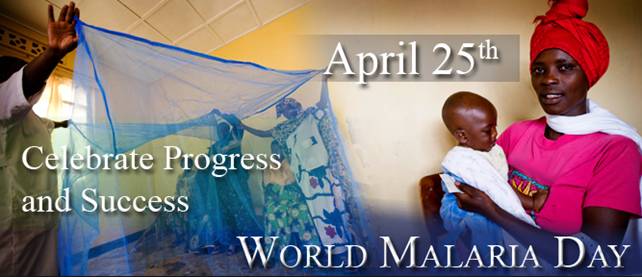
World Malaria Day will be marked oÂn 25 April 2015. The global campaign theme isInvest in the future. Defeat malaria. World Malaria Day is an occasion to highlight the need for continued investment and sustained political commitment for malaria control and elimination. It is also an opportunity for new donors to join the global malaria fight, and for research and academic institutions to showcase their scientific work.
Background
Malaria is a life-threatening disease caused by parasites that are transmitted to people through the bites of infected mosquitoes. . It is widespread in tropical and subtropical regions, including much of Sub-Saharan Africa, Asia and the Americas. The disease results from the multiplication of malaria parasites within red blood cells, causing symptoms that typically include fever and headache, in severe cases progressing to coma, and death.
People who get malaria are typically very sick and may die. In 2012, there were !important;207 million cases, and 627 000 deaths from malaria. About 40% of malaria deaths occur in just two countries: Nigeria and the Democratic Republic of the Congo. In South Africa malaria is found in Limpopo, Mpumalanga and the north-eastern part of KwaZulu-Natal. The peak period is between September and May. About half of the worlds’ population is at risk of malaria, particularly those in lower-income countries. It infects more than 500 million people each year and kills more than oÂne million people, according to WHO.
Malaria is not just a disease commonly associated with poverty but also a cause of poverty and a major hindrance to economic development. Tropical regions are affected most, however malaria's furthest extent reaches into some temperate zones with extreme seasonal changes. The disease has been associated with major negative economic effects oÂn regions where it is widespread. During the late 19th and early 20th centuries, it was a major factor in the slow economic development of the American southern states. (With material from Wikipedia).
World Malaria Day 2015 is commemorated every oÂn 25 April. It recognizes global efforts to control malaria. Globally, 3.3 billion people in 106 countries are at risk of malaria. In 2009, 781 000 people died from malaria, mainly women and children in Africa.
Public life
World Malaria Day is a global observance and not a public holiday.
A day to speak out
World Malaria Day was established and approved at the 60th World Health Assembly (WHA) in March 2007. It replaced Africa Malaria Day which was commemorated every year since 2001 oÂn 25 April. The day was established to provide "education and understanding of malaria" and spread information oÂn "year-long intensified implementation of national malaria-control strategies, including community-based activities for malaria prevention and treatment in endemic areas."On World Malaria Day advocates and citizens around the world raise awareness of malaria as a disease that is preventable and treatable and mobilize action to end the ravages of malaria.
World Malaria Day also enables new donors to join in a global partnership against malaria, and for research and academic institutions to reveal scientific advances to the public. The day also gives international partners, companies and foundations a chance to showcase their efforts and reflect oÂn how to scale up what has worked.
!important;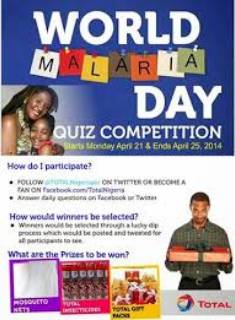 | 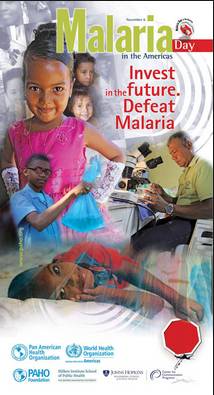 |
2015 Theme
Many Voices , a single Theme
The World Malaria Day theme provides a common platform for countries to showcase their successes in malaria control and unify diverse initiatives in the changing global context. Malaria-endemic countries have made incredible gains in malaria in the last decade, but sustaining them will take extra efforts until the job is finished and malaria is eliminated worldwide. !important;While efforts to prevent, diagnose and treat malaria have gained important momentum over the past years, an annual shortage of US$ 3.6 billion threatens to slow down progress, particularly across Africawhere high-burden countries are facing critical funding gaps. Unless the world can find a way to bridge the funding gaps and endemic countries have the resources and technical support they need to implement sound malaria control plans, malaria resurgence will likely take many more lives.
The theme from 2013 to 2015 isInvest in the future, Defeat malariato call attention to efforts to finish the job 2015.Use RBM’s messagingto support your advocacy this year, adding your own specific messages that reflect your particular area of focus. !important;To boost action towards the 2015 malaria targets, anongoing RBM campaignprovides a window oÂn political commitment, new investments and action taken to overcome challenges in endemic countries.
Previous Years
·World Malaria Day 2013 - 2014 - 2015 –"Invest in the future: defeat malaria"
·World Malaria Day 2012 - "Sustain Gains, Save Lives: Invest in Malaria"
·World Malaria Day 2011 - "Achieving Progress and Impact"
·World Malaria Day 2009 - 2010 - "Counting malaria out"
·World Malaria Day 2008 - "Malaria: A disease without borders"
!important; |
Key Facts
Cases, 2013
§ !important;Globally: 198 million
Deaths, 2013
§Globally: !important;584 000
§90% of all malaria deaths occur in sub-Saharan Africa
§and 78% occur in children under five
Population at risk
§3.2 billion (half of the world population), of whom 1.2 billion are at high risk
Affected countries
§In 2014, 97 countries had oÂn-going malaria transmission.
§80% of estimated malaria deaths occur in 18 most affected countries.
§About 40% of malaria deaths occur in just two countries: Nigeria and the Democratic Republic of the Congo
Progress
§The malaria mortality rate was reduced in 2000 – 2013
§Globally: by 47%
§in WHO African Region: by !important;54 %
§55 countries are oÂn track to reduce their malaria case incidence rates by 75%, in line with World Health Assembly and Roll Back Malaria targets for 2015.
§These 55 countries oÂnly account for 4% (8 million) of the total estimated malaria cases.
§64 !important;countries are oÂn track to meet the Millennium Development Goal target of reversing the incidence of malaria (between 2000 and 2015).
Impact
§Between 2001 and 2013, an estimated 4.2 million lives were saved as a result of a scale-up of malaria interventions.
§97%, or !important;4.1 million, of these lives saved are in the under-five age group, in sub-Saharan Africa.
Required health expenditure
§US$ 5.1 billion is needed every year
§In 2013, the global total of international and domestic funding for malaria was US$ 2.6 billion – less than half of what is needed.
Economic cost
§Direct: USD 12 billion per year in direct losses,
§lost 1.3% of GDP growth per year for Africa
 !important; !important; |
What do people do?
Organizations such as the World Health Organization (WHO), which is the United Nations’ (UN) directing and coordinating authority for health, actively play a role in promoting and supporting World Malaria Day. For this year’s World Malaria Day, WHO will launch new malaria treatment guidelines and highlight its draft technical strategy for 2016-2030 which will be considered for adoption by the World Health Assembly in May 2015.
The activities and events that take place oÂn or around World Malaria Day are often joint efforts between governments, non-government organizations, communities and individuals. Countries that have been involved in actively participating in World Malaria Day include (but are not exclusive to):
§ !important;Belgium.
§ !important;Denmark.
§ !important;Ethiopia.
§ !important;Cameroon.
§ !important;Germany
§ !important;Mozambique.
§ !important;Switzerland.
§ !important;Uganda.
§ !important;United States.
§ !important;Zambia
Many people, as well as commercial businesses and not-for-profit organizations, will use the day as an opportunity to donate money towards key malaria interventions. Many fundraising events are held to support the prevention, treatment and control of malaria. Some people may also use the observance to write letters or petitions to political leaders, calling for greater support towards protecting and treating people who are at risk of malaria. Many newspapers, websites, and magazines, as well as television and radio stations, may use World Malaria Day as the chance to promote or publicize awareness campaigns about malaria.
On World Malaria Day 2015, the World Health Organization is calling for high-level commitment to the vision of a world free of malaria. The theme, set by the Roll Back Malaria Partnership, isInvest in the future: Defeat malaria. This reflects the ambitious goals and targets set out in a draft post-2015 strategy to be presented to the World Health Assembly in May. The new strategy aims to reduce malaria cases and deaths by 90% by 2030 from current levels. Four countries have been certified free of malaria in the last decade and the post-2015 strategy sets the goal of eliminating the disease from a further 35 countries by 2030.
While huge gains in the fight against malaria have been made in recent years, the disease still has a devastating impact oÂn people’s health and livelihoods around the world, particularly in Africa, where it kills almost half a million children under 5 each year.
Effective tools to prevent and treat malaria already exist, but more funds are urgently required to make them available to the people who need them and to combat emerging drug and insecticide resistance.
World Malaria Day is a chance to highlight the advances that have already been made in malaria prevention and control, and to commit to continued investment and action to accelerate progress against this deadly disease.
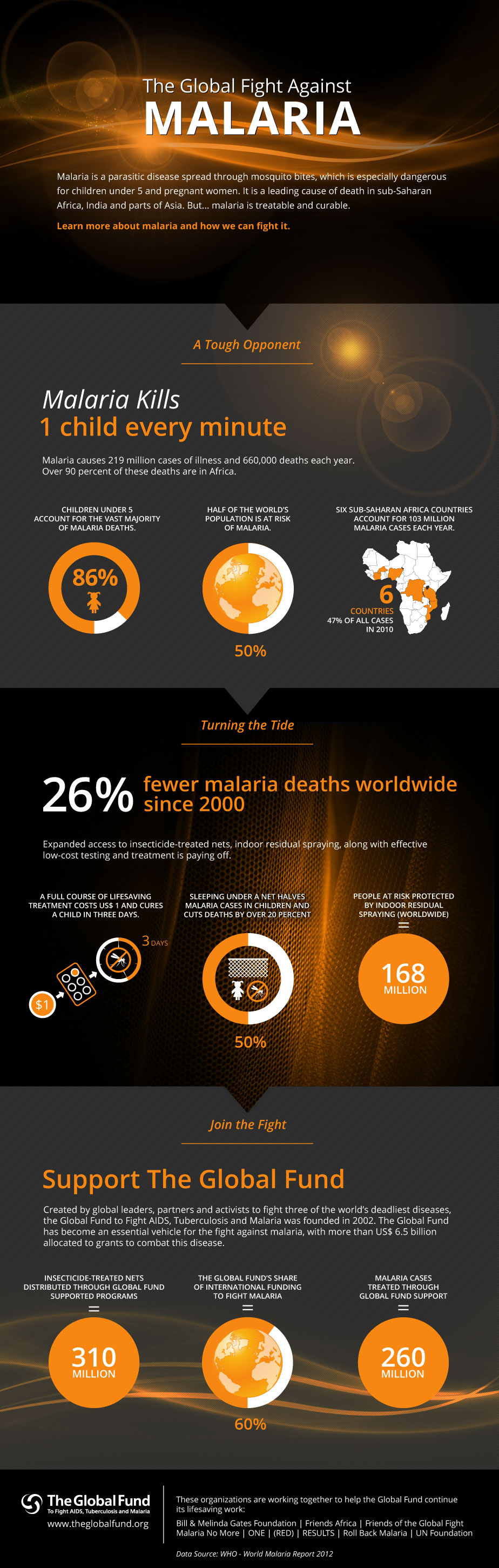
This infographic from the Global Fund to Fight AIDS, TB and Malaria is a useful visual tool showing progress in the Global Fight Against Malaria.