The Health Ministry has recently announced the sector's top ten events of 2016. Notably, most of outstanding events belonged to the fields of health care, vaccine production and health insurance.
Top ten events of the health sector in 2016 include:
1. At 7:20 am on January 22, the first baby born through surrogacy was delivered by Caesarean section at the Hanoi-based Central Maternity Hospital.Surrogacy was official allowed in the Law on Marriage and Family adopted by the National Assembly in 2015. As by now, nearly 200 surrogacy cases have been approved, with 30 surrogate mothers having given birth.
Only three hospitals meet the technical requirements for surrogacy. They are the Central Maternity Hospital in Hanoi, Tu Du Hospital in Ho Chi Minh City, and Hue-based Central Hospital.
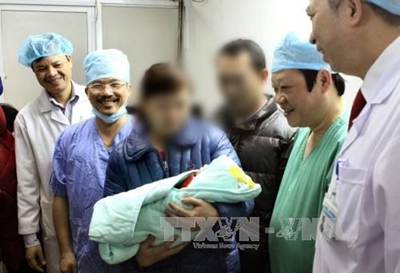 |
First baby born through surrogacy in Viet Nam. |
2. Hospitals nationwide implemented synchronous measures for better patients' satisfaction about their services.One year after the Health Minister issued a renovation plan on conducting reviews of services and health workers' attitudes towards patients, the majority of health workers are aware of the necessity of improving their attitude and communication skills while they are on duty.
The healthcare sector has also worked hard to increase the effectiveness and professionalism in providing services in order to raise the quality of health check-ups and treatment for patients.
The measures, which included promoting friendly attitude of staff, building clean and green facilities, and improving comprehensive management, have brought about positive changes.
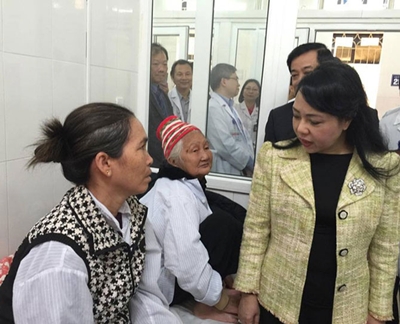 |
Minister of Health Nguyen Thi Kim Tien asks patients' relatives about
the medical staff’sstyle and attitude towards them in a hospital. |
3. Vietnam successfully produced measles-rubella vaccine.
The Centre for Research and Production of Vaccines and Biology announced on November 8 that domestically-produced measles-rubella vaccine had been clinically tested and proven safe and effective.
The vaccine was produced under a joint project with the Japan International Co-operation Agency (JICA). It will be available for the national expanded immunization programme as from 2017.
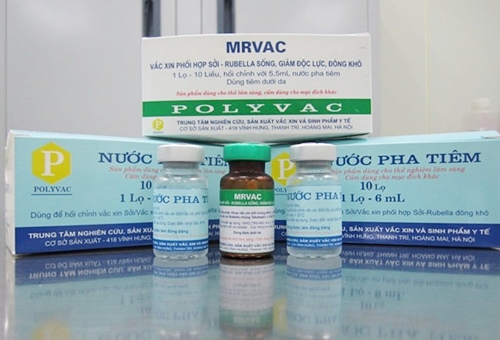 |
Made-in-Vietnam measles-rubella vaccine (Source: VNA) |
4. The first robotic laparoscopic surgery was successfully performed on an adult.
Binh Dan Hospital in Ho Chi Minh City on December 10 officially applied robotic surgeries for adult patients, becoming the first of its kind in Vietnam to offer such an advanced technique for adults.
Binh Dan Hospital has utilised the robotic surgical system since November, and is now the only clinic to offer robot-assisted surgeries for adult patients. The equipment can help surgeons access the most remote and smallest areas of the patient's body.
Earlier in 2014, a robotic surgical platform was deployed for young patients at the Vietnam National Hospital of Pediatrics in Hanoi.
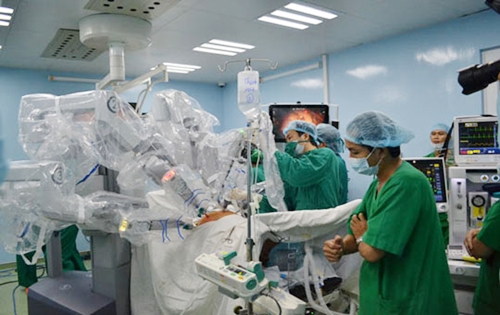 |
On December 10, ten adult patients at the Binh Dan Hospital in HCM City received robotic surgery. |
5. The health insurance coverage reached 81.3 percent of population as of November 30, exceeding the early target by 2.3 percent.
A total of 81.3% of the population was covered by health insurance as of November 30, 2016, equivalent to 75,160,311 people, exceeding the target set by the National Assembly and the Government (79%).
The Vietnam Social Insurance recently submitted a proposal to the Government setting a target of having 90% of the population covered by health insurance by 2020.
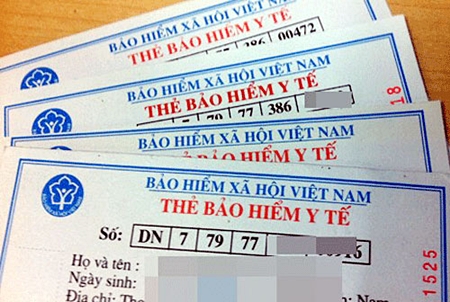 |
Health insurance to "save" hundreds of thousands of poor patients in critical illnesses. |
6. The Health Ministry moved up 9 places in the ministerial-level public administration reform (PAR) index to the 8th out of 19 ministries and ministerial-level agencies.
The Ministry of Health scored the public administrative reform index of 86.85 points on a scale of 100, according to the Government's report released on August 17.
With the result, the ministry jumped up nine places in comparison with last years report.
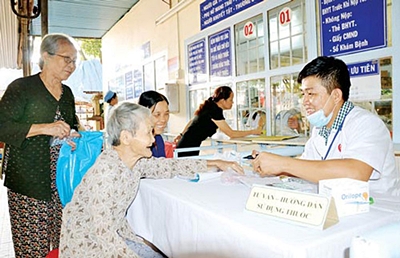 |
The Ministry of Health scored the public administrative reform index of 86.85 points
on a scale of 100, according to the Government's report released on August 17.
(Illustration photo) |
7. The Prime Minister approved a project on developing grassroots health facility network.
The Prime Minister has approved a plan to develop a new local-level medical network by 2025 to improve the capability and service quality of health care for Vietnamese.
The network covers medical stations at districts, towns, villages, communes, wards and cities under provincial-level. The project focuses on boosting human resources as well as overhauling the structure, finance and operation mechanism of these facilities. The work is expected to help improve service quality and ease overcrowded conditions at central medical facilities.
All communal medical centres will also have to meet the national criteria for communal healthcare.
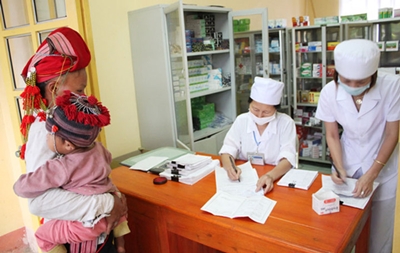 |
The proposal to develop communal health system receives the prime minister's
approval according to the Decision No. 2348/QD-TTg dated 05 December 2016.
(Illustration photo) |
8. Medical workers' salaries were calculated in insurance-covered health services fees.
The health ministry had drawn up a roadmap until the end of 2017 to increase hospital fees, which also covers the salaries of doctors and other health workers. The move was in line with the roadmap for the adjustment of public service prices as regulated in Decree 16/2015/ND-CP. The fee hike was applied in 32 provinces and cities, where 85% of the residents have health insurance cards.
The fee adjustment was aimed at ending subsidies to hospitals and gradually improve the quality of healthcare services. As such, the State budget previously used for paying medical workers is transferred to support people joining health insurance.
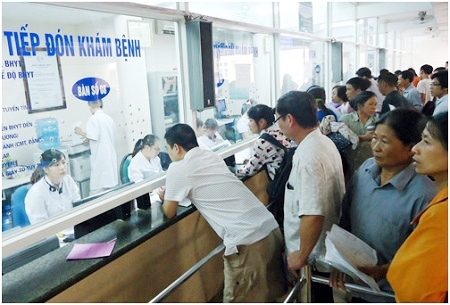 |
Medical workers' salaries were calculated in insurance-covered health services fees.
(Illustration photo) |
9. A common code list for health management, treatment and health insurance payment was implemented for the first time.
The list serves data connection among management agencies, medical establishments and the Vietnam Social Insurance to better manage patients' records and facilitate insurance payment procedures.
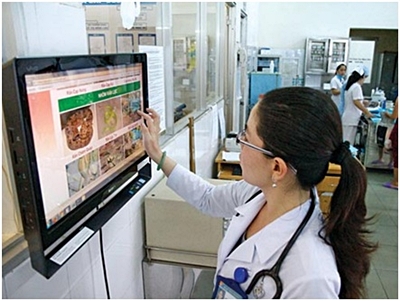 |
IT system for managing healthcare services put into operation widely. |
10. Vietnam was elected to the World Health Organisation's Executive Board for 2016 - 2019.
Vietnam was elected as representatives for the Western Pacific region in the World Health Assembly's Executive Board for a three-year tenure between May 2016 and May 2019.
The selection was made at the 66th session of the World Health Organization Regional Committee for the Western Pacific, which concluded in Guam, the US, on October 16, 2015.
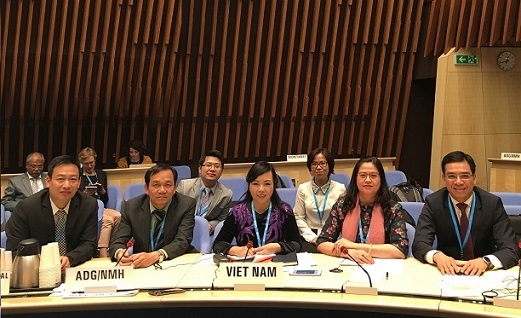 |
As a representative of ASEAN in the Western Pacific region, Vietnam is expected to provide a voice
representing developing countries. |