Acting on the soil-transmitted helminthiasis control program for school children in 4 West-highlands provinces of Kon Tum, Gia Lai, Dak Lak and Dak Nong, the World Health Organisation (WHO) continues its support of drugs and additional fund for the deployment of the deworming campaign.
Receiving the support source of Albendazole 400mg tablets, all provinces took the initiatives of planning the health education and communication; the schools organised meetings for teachers, parents and school children prior to mass drug administration.
Between November-December of 2009, the provinces carried out the thorough deworming activities. As a steering body, the IMPE-QN organised monitoring teams to supervise these activities in some primary schools in Dak Nong and Gia Lai provinces.
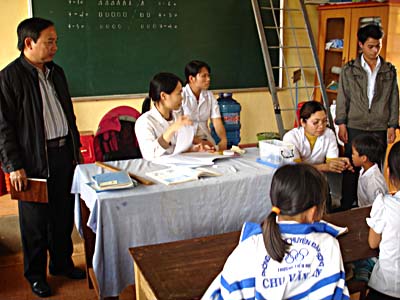 |
Nguyen Van Chuong, MD., PhD., Vice-director IMPE-QN monitoring the mass deworming
campaign in a primary school of Dak Nong province |
The results of the monitoring showed that the provinces had prepared well the planning procedures, with the close cooperation between the health and education sectors. As a results, a 95-100% of mass administration was reached, and no side-effects were found. Above all, the mass deworming campaign received enthusiastic supports from children's parents who wished the mass administration to be carried out frequently. However, some schools still had loosen cooperation with the health sector, giving anthelmintic drugs for student to take at home, resulting in low coverage.
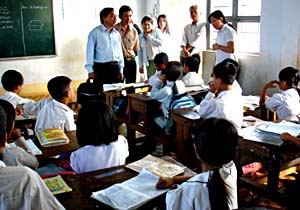 | 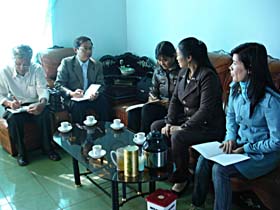 |
Moniroting team working at a | primary school in Gia Lai province |
Health education was also strengthened in schools, together with the regulartory activities of good sanitation, hand-washings and clean environment. Although the anthelmintic program has not been deployed nationwide, with the support from the WHO, the mass deworming campaign for school children definitely contributes to protecting and improving children's health in a better and achievable way, both physically and mentally.