On June 6, 2010 the annual meeting of the Central Project Managing Unit (CPMU) for dengue fever control was held to evaluate the dengue fever situation in the first 5 months of 2010 and work out the activities for the remaining time of the year. The meeting also assigned responsibilities for the institutes involved in the Central Vietnam dengue fever control project.
Degue fever situation in the first 5 months of 2010 in Central Vietnam
At the meeting, the CPMU in Central region announced that at present there are 11 central provinces (from Quang Binh to Binh Thuan) under its responsibilities. According to the classification of the National Dengue Control Program, there are 5 provinces categorised as class A, including Da Nang, Phu Yen, Khanh Hoa, Ninh Thuan and Binh Thuan; and the other 6 provinces (Quang Binh, Quang Tri, Thua Thien-Hue, Quang Nam, Quang Ngai and Binh Dinh) as class B. In adition, there are 62 pilot districts of dengue fever out ofthe total 110; and 104 pilot communes/1535 total communes.
During the first 5 months of 2010, the total number of dengue cases in central Vietnam reached as many as 3,359 cases, or 24.7% of the total national cases and increased by 96.6% in compared with the same period of 2009. Khanh Hoa is the province having the highest number of dengue cases with the first-5-month incidence of 1,199 cases; followed by Da Nang city with 850 cases. In comparision with the same period last year, a majority of central provinces reported higher incidence. For instance, Thua Thien-Hue had 173 cases over 2 cases, Danang (850/47 cases), Quang Nam (83/7), Quang Ngai (492/235), Binh Dinh (476/275) and Khanh Hoa (1,199/683).
Vector indices of dengue fever in Central region (Table)
Province | Breteau Index (BI) | Density Index (DI) |
Quang Binh | 14.4 | 0.01 |
Quang Tri | 11.4 | 0.01 |
Thua Thien-Hue | 9.3 | 0.11 |
Da Nang | 8.4 | 0.15 |
Quang Nam | 14.7 | 0.11 |
Quang Ngai | 4.0 | 0.02 |
Binh Dinh | 11.3 | 0.21 |
Phu Yen | 5.6 | 0.07 |
Khanh Hoa | 17.2 | 0.14 |
Ninh Thuan | 14.1 | 0.11 |
Binh Thuan | 31.7 | 0.42 |
As of explanations by the CPMU in Central Vietnam, although it is at the beginning of the hot season, dengue fever situation turns to be very complicated with the up-rising trend of dengue cases and deaths. The analyses of the dengue cases in the first 5 months of 2010 found that: the proportion of dengue haemarrhagic fever (DHF) cases was much higher (79.0%) than the dengue fever (DF) cases with only 21.0%; the clinical classifications (based onWHO’s classifications of dengue severity) at levels III and IV occupied 10.0%; and more adults were contracted with DF/DHF (62.0%) than children under 15 years of age (38.0%).
It is therefore implied that the dengue fever situation in Central Vietnam 2010 increased considerably. In this year, January is the month of a very high number of dengue incidence, increased by 68.7% compared with last year and ever higher against the same months of 2001 and 2005, the cyclic years of higher dengue incidence. In addition, the clinical manifestations of the dengue cases by month reflect the similar trend with the high-incidence years: slight decrease of dengue cases in February and March but surge again in April and speed up in May. Moreover, some small-scaled foci (at communal level) of dengue were reported in Da Nang and Khanh Hoa. Therefore, the prediction of dengue fever situation in the remaining 6 months of 2010 will be very complicated with two peaks of dengue outbreaks, proportionally during June-July and November-December.
It was from the meeting that the CPMU admitted some shortcomings during the implementation of dengue fever control activities for the last 5 months in Central Vietnam as follows:
On case supervisions: Some provincial centres of preventive medicine did not perform case supervision at hospitals of other sectors such as military, transports and railways hospitals. Furthermore, epidemiological surveillance was not conducted properly at the community level, and the screening practice of typical dengue fever cases was not carried out well from the asymptomatic cases.
Vector control: the deployment of dengue vector control was not implemented on the monthly basis, or not integrated in the activities of the volunteers. Also, the surveillance of the secondary vector, ie. Aedes albopictus, was not paid much attention at localities.
Treatment of small-scale foci: some provinces did not perform the prompt detection and treatment of small-scale foci. This has been as a result of formalistic practice in daily activities such as home lavicides;
Treatment of large-scale foci (ward/communal level): The identification of ward/communal-scale foci was not carried out promptly. Upon facing the occurring foci, no health education methods were carried out effectively. Regarding vector control activities, ineffective larvicidal measures were observed together with low-quality ULV spraying techniques.
Implementation of workplan and assignemt of responsibilities to dengue control PMUs in the coming time
With four major objectives of 1) reducing the morbidity; 2) reducing mortality; 3) preventing the dengue outbreaks and 4) socializing dengue fever control activities and updating legal procedures for project implementation, the CPMU in Central Vietnam described in detail the specific targets for dengue fever control activities in the whole region; proposed major duties and assigned responsibilities for each of its constituent units for conducting the workplan in the 6 remaining months of 2010.
Institutes and provincial hospitals: Continuously monitor, direct all-embracing dengue fever activities. Choose 1-2 provinces for planning sentinel surveillance. Conduct biological control measures in comparison with the chemical control ones. Apply protective methods prior to university entrance examinations for students in Thua Thien-Hue, Da Nang, Binh Dinh and Khanh Hoa, which serve as examining hubs. Finally, supervise and evaluate dengue fever of provinces in July and November.
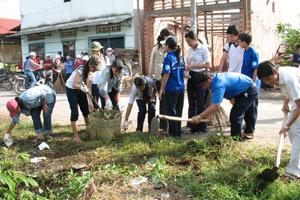 |
Applying protective methods prior to university entrance
examinations for students in Thua Thien-Hue, Da Nang,
Binh Dinh and Khanh Hoa, which serve as examining hubs. |
Provincial preventive medicine centres: Intensively apply vector control such as adulticidal and larvicidal measures, and prevent the spreading dengue outbreaks. Also, conduct workplan in various aspects of case surveillance, serological and viral surveillance, and vector surveillance. In addition, implement prompt monitoring and treatment of small-scale foci for approriate control measures. More importantly, carry out adulticidal chemical spraying for the whole ward/commune and apply all-in-all larvicidal measures.
Executing the functions and responsibilities assigned by the Ministry of Health and the Central Project Managing Unit in implementing the National Dengue Fever Control Program in Central Vietnam for, the Institute of Malariology-Parasitology and Entomology, Quy Nhon coordinately work with the Nha Trang Pasteur Institute to conduct the activities such as: supervising and supporting provinces in terms of vector surveillance and control measures; conducting sensitivity and resistant trials and evaluation of chemical efficacy used for adulticidal purposes; and cooperating with central provinces in larvicidal and adulticidal control measures. The area under IMPE coverage includes Quang Nam, Quang Ngai, Binh Dinh and Phu Yen provinces.
With the clearly defined workplan and assigment, the members of the dengue fever CPMU and the PMUs in Central Vietnam agreed with the activities for the remaining time of 2010 in order to minimize the impact of dengue fever in Central provinces.